 Kala & Co.
The manufacturer you source from shapes everything — quality, delivery timelines, and how your customers perceive your catalog. This guide covers what wholesalers should actually look for when choosing an Oriental Rugs Manufacturer, and why Handmade Oriental Rugs deserve more scrutiny than most buyers give them.
Sourcing rugs sounds simple until you're the one placing a bulk order and hoping it matches the sample that arrived three weeks earlier. In this trade, the manufacturer behind the product matters just as much as the product itself — maybe more. Get that relationship wrong, and you're the one absorbing the cost, not them.
Every rug business runs on trust. Trust that an order arrives on schedule. Trust that batch twelve looks as good as batch one. Trust that the craftsmanship actually justifies what you're paying for it.
A genuine Oriental Rugs Manufacturer tends to show it in small ways — knotting quality that doesn't drift between production runs, honest answers about timelines instead of vague reassurances, and materials that get tested before anything goes into production. Skip these basics, and a wholesaler ends up paying for it later, whether that's through returns, delays, or a retail customer who never comes back.
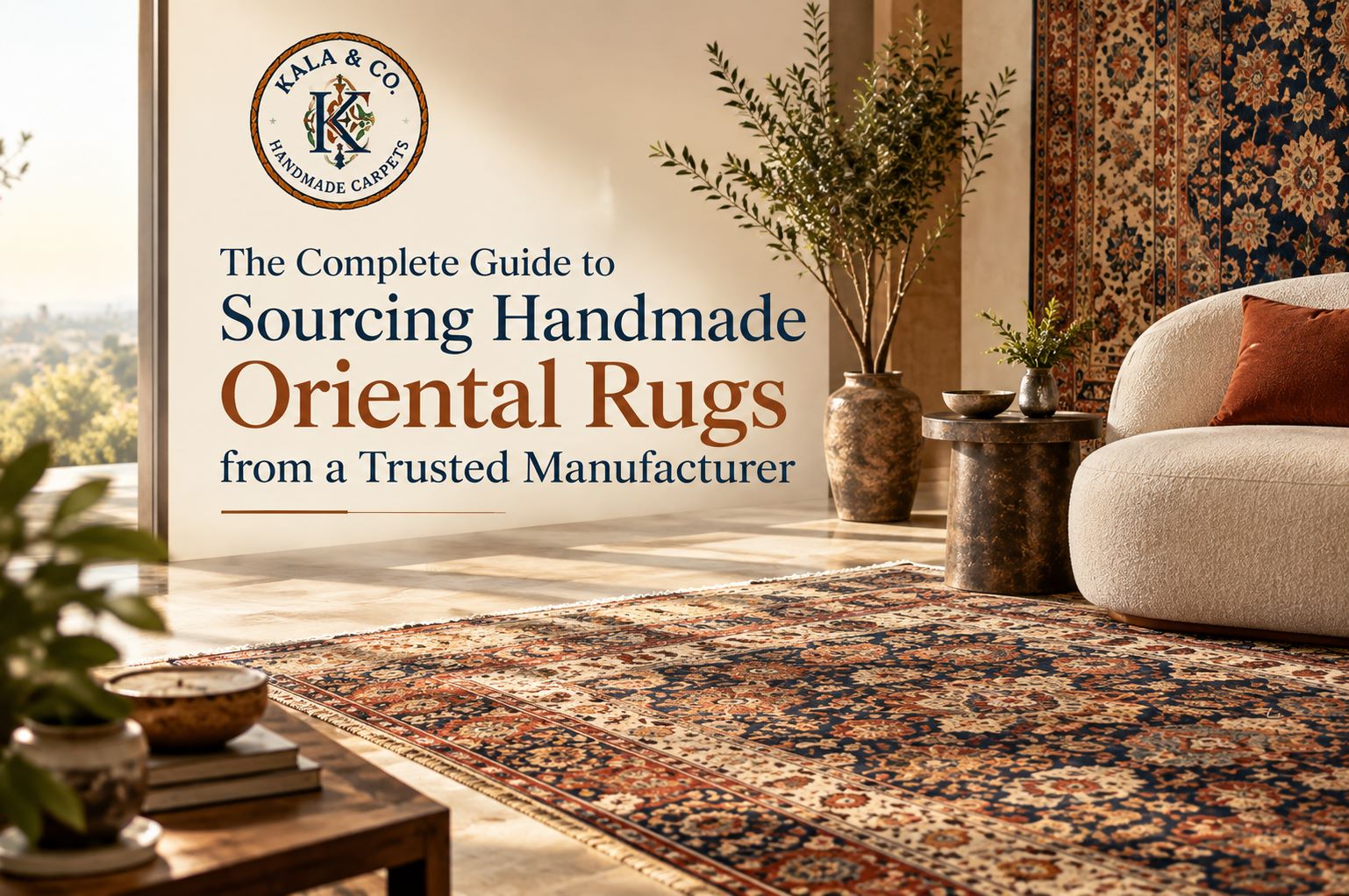
There's a real difference between a rug that's hand-knotted and one that only looks like it. Handmade Oriental Rugs are built by artisans working natural fibers — wool, silk, cotton — knot by knot, often following design traditions that trace back to Persian, Turkish, and Indian weaving heritage.
That process shows up in the finished piece. No two rugs are identical, the texture holds depth a machine loom simply can't fake, and the piece is built to hold up for decades rather than a few years. It's a slower, less forgiving way to make a rug — but it's the reason handmade pieces still command respect in a market flooded with mass production.
Buying at scale changes the risk profile. A few things worth confirming before committing to any Oriental Rugs Manufacturer:
None of this is complicated, but skipping it is exactly how wholesalers end up with a warehouse full of stock that doesn't move.
Kala & Co. was built around bulk buyers, not just the occasional retail customer picking one rug for a living room. We work with wholesalers and distributors who need dependable quality at volume, retail showrooms after handcrafted collections that don't look like everyone else's imports, and designers or hospitality projects that need custom sizing and colorways to match a specific brief.
Every order goes through the same checks, regardless of size — yarn selection, dye consistency, knot density, final finishing. It's not glamorous work, but it's the difference between an Oriental Rugs Manufacturer you can build a catalog around and one you're constantly double-checking.
Something worth noting for wholesalers and retailers in the USA: buyer behavior has been moving away from mass-produced floor coverings for a while now, and it's accelerating. People want to know a rug was actually made by hand, not just marketed that way. Kala & Co. ships to USA-based buyers with export-ready packaging and collections built around what's actually selling there — traditional patterns alongside cleaner, transitional styles. For a wholesaler trying to read where the market's headed, that shift is worth paying attention to.
The rug businesses that scale well don't treat sourcing as a transaction they repeat when stock runs low. They build an actual relationship with their manufacturer — one where preferences, seasonal demand, and order patterns are understood well enough that reordering gets faster and less risky every time. That's the real difference between buying rugs and having a supply chain you can count on.
1. What should I check before choosing an Oriental Rugs Manufacturer?
Look past the sample rug. Check quality consistency across full orders, realistic timelines, transparent pricing, and whether their design range actually fits your target market.
2. Can Kala & Co. handle bulk orders for wholesalers?
Yes — bulk sourcing is what we're built for, with flexible order quantities, competitive pricing, and shipping timelines we actually stick to.
3. What materials go into your Handmade Oriental Rugs?
Natural fibers — wool, silk, and cotton — hand-knotted rather than machine-made, chosen for how they hold up over time and how well they take intricate patterns.
4. Do you offer custom designs for specific markets like the USA?
Yes, custom sizing, colorways, and patterns are available, including collections designed specifically around what's trending with USA buyers.
If you're evaluating your next Oriental Rugs Manufacturer, it's worth asking harder questions than usual — this is inventory you're betting your reputation on. Kala & Co. is happy to walk you through samples, bulk pricing, or our current Handmade Oriental Rugs collections whenever you're ready to talk.